Help & Contact
 Order Tracking


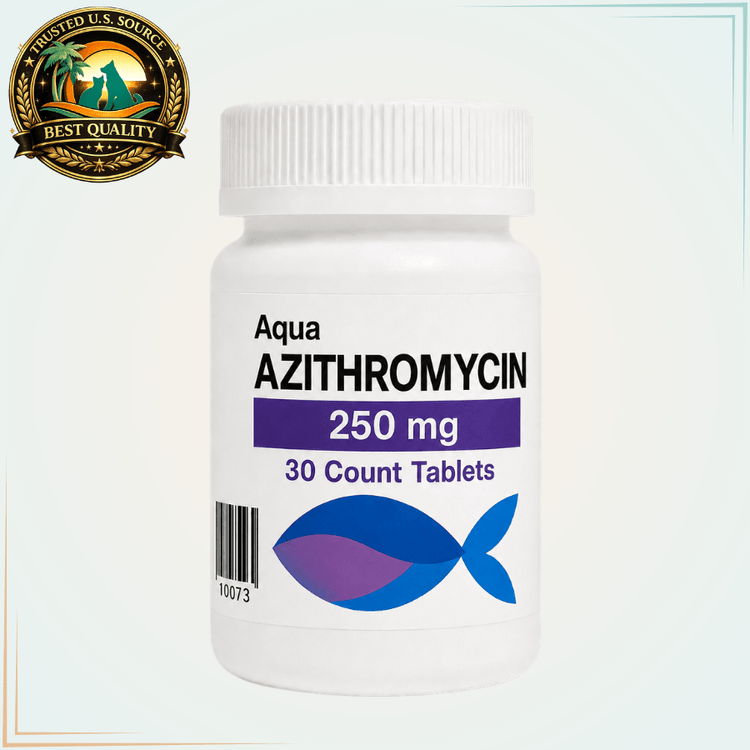
Aquarium Azithromycin 250mg Fish Antibiotic for Columnaris - 30 Tablets
Regular price $79.95
In Stock
- FREE 1-3 day shipping over $49
CAL-AQ-AZITHRO-250-30-T
Category:
Shipping Estimates & Rates
- Ground Advantage 3–7 Days
- Priority Mail 2–4 Days
- Priority Mail Express 1–2 Days
- UPS® Ground 3–5 Days
- UPS® Ground Saver 3–7 Days
- UPS 2nd Day Air® 2–3 Days
- UPS 3 Day Select® 3–4 Days
- UPS Next Day Air® 1–2 Days
Aquarium Azithromycin 250mg is a macrolide fish antibiotic in a 30-tablet package, positioned for ornamental-fish keepers researching columnaris, bacterial gill disease, mouth rot, fin deterioration, and other susceptible bacterial infections. It is also found through searches for fish azithromycin, Aquarium Zithro, Fish Zithro 250mg, and antibiotics for aquarium fish. The product’s relevance is strongest when symptoms and history point to bacteria—not when a white patch is automatically labeled “fungus.”
Azithromycin 250mg: product details
- Active ingredient: Azithromycin
- Strength: 250mg per tablet
- Package: 30 Tablets
- Product category: Aquarium fish antibiotic or antimicrobial
- Intended animals: Ornamental aquarium fish only
- System context: Freshwater or saltwater use only when supported by the product label
Common aquarium searches and condition context
This product is commonly researched in connection with the following aquarium-health terms. The list describes search and selection context; it is not a diagnosis and does not mean every case will respond to this ingredient.
- columnaris
- bacterial gill disease
- fin rot
- tail rot
- mouth rot
- ulcers
- gram-positive bacteria
- gram-negative bacteria
Columnaris is a key search intent
Columnaris can appear as pale plaques, saddle-shaped lesions, eroding fins, mouth damage, or gill involvement. Because lesions may look cottony, aquarists often search for fungal treatments first. Columnaris is bacterial, and advanced cases can progress quickly. Azithromycin is frequently discussed alongside doxycycline and ciprofloxacin in columnaris-related aquarium searches, but correct identification and prompt correction of temperature, crowding, organic load, and oxygen problems are equally important.
Macrolide activity in aquarium context
Azithromycin interferes with bacterial protein production. That mechanism differs from penicillins and cephalosporins, which target bacterial cell walls, and from fluoroquinolones, which affect bacterial DNA processes. Understanding the class helps prevent accidental duplication when comparing multiple fish antibiotics online. It also clarifies why azithromycin is not an antifungal or general parasite medication and should not be expected to address Ich, velvet, flukes, or water-mold growth.
Recognize gill-disease warning signs
Rapid breathing, flared gill covers, gasping near the surface, rubbing, reduced appetite, and isolation can accompany gill disease. Those signs are not specific: ammonia, nitrite, low oxygen, chlorine, parasites, and bacterial infection can all affect respiration. Test water and increase aeration immediately while the cause is investigated. If several fish are distressed at once, environmental causes deserve priority because a medication cannot reverse an ongoing toxin or oxygen crisis.
Using a 250mg tablet format responsibly
Each tablet supplies 250mg of azithromycin, and the bottle contains 30 tablets. Tablets support clear inventory control and label-based preparation. Do not translate human, bird, or mammal directions into an aquarium plan, even when the ingredient name is familiar. Treatment route, water volume, species sensitivity, filtration, and exposure time all change the decision. The product is intended only for ornamental aquatic use under its aquarium labeling.
Monitor the whole disease curve
Successful care is more than a single visual improvement. Track breathing rate, appetite, posture, lesion spread, fin edges, feces, and water chemistry. Maintain a stable hospital tank and minimize handling. If the fish worsens, if lesions spread within hours, or if multiple prior products have failed, seek aquatic veterinary help. Diagnostic sampling is especially valuable for fast-moving columnaris-like outbreaks because several diseases share the same white or grey external appearance.
Frequently asked questions
Is every cottony patch columnaris?
No. Water molds, damaged tissue, excess mucus, and bacterial columnaris can look similar. Diagnosis should include water quality and progression pattern.
Is azithromycin a fungus cure?
No. Azithromycin is antibacterial. Confirm whether the problem is bacterial, fungal, parasitic, or environmental before selection.
Essential safety information
For ornamental aquarium fish only. Not for human use, not for veterinary use in mammals, and not for fish intended for human consumption. Keep out of reach of children and household pets. Use only according to the original product label and applicable law. Do not begin treatment solely from a search result. Confirm water quality and seek an aquatic veterinarian or qualified fish-health professional for severe, uncertain, recurrent, or rapidly progressing disease.
Your order of 100$ or more gets free standard delivery.
- Standard delivered 4-5 Business Days
- Express delivered 2-4 Business Days
Orders are processed and delivered Monday-Friday (excluding public holidays)
members enjoy free returns.