 Help & Contact
 Order Tracking


Bird Azithromycin
Bird Azithromycin is an ingredient-specific antibacterial category for veterinarian-directed care of non-food pet birds. Bird owners may also recognize or search for these products using the familiar name Bird Zithro.
This CalVet Supply collection organizes the currently available azithromycin products so customers can compare the active ingredient, strength, tablet quantity, storage information, current availability, and label specifications in one place.
Veterinary guidance required: A bird’s species, body weight, diagnosis, age, health status, and other treatments can materially affect product selection and administration. An avian veterinarian should determine the appropriate product, amount, method, frequency, and duration.
Important notice: Products in this collection are intended only for the non-food animals identified on their labels. They are not intended for humans, poultry raised for food, or animals producing eggs or other products for human consumption.
Shop Bird Azithromycin for Non-Food Pet Birds
Available Bird Azithromycin products should be compared according to the verified active ingredient, individual tablet strength, package quantity, intended animal category, and current label information.
For a product labeled Azithromycin 250mg, the 250mg designation ordinarily identifies the amount of azithromycin contained in each tablet. It does not represent the total amount in the bottle. Strength and tablet count should therefore be displayed separately.
What Is Bird Zithro?
Bird Zithro is a familiar product-style name used for non-food pet-bird products containing azithromycin. Azithromycin belongs to the macrolide class of antibacterial ingredients and has a different activity profile from amoxicillin, doxycycline, enrofloxacin, tylosin, and other ingredients used in avian care.
Azithromycin is not automatically appropriate whenever a bird appears unwell. Breathing changes, appetite loss, altered droppings, inactivity, and feather changes can have bacterial and non-bacterial causes. Accurate diagnosis is essential before selecting an antibacterial product.
Birds for Which Owners May Research Azithromycin
Bird owners may encounter azithromycin while researching veterinarian-directed care for different non-food companion and aviary birds, including:
- Pigeons and doves
- Parrots and parakeets
- Canaries and finches
- Cockatiels
- Budgerigars
- Macaws and cockatoos
- Other non-food aviary birds
These species vary significantly in body size, metabolism, health risks, and sensitivity. A tablet strength listed on a product page is not an administration recommendation for every bird.
Signs That Require Avian Veterinary Evaluation
Birds frequently conceal illness until a condition becomes advanced. Prompt professional evaluation is especially important when a bird displays:
- Open-mouth breathing or increased respiratory effort
- Tail bobbing while breathing
- Nasal or eye discharge
- Sneezing accompanied by lethargy or discharge
- Changes in voice or breathing sounds
- Reduced appetite or unexplained weight loss
- Persistent fluffed feathers and inactivity
- Changes in droppings
- Weakness, balance problems, or difficulty perching
These signs do not confirm a bacterial infection. Respiratory distress and other symptoms can also result from fungal disease, parasites, viruses, toxins, nutritional deficiencies, environmental irritants, or organ-related illness.
Why Diagnosis Matters Before Using Azithromycin
Azithromycin acts against susceptible bacteria and may be considered by avian veterinarians in selected bacterial or Mycoplasma-related situations. It does not treat every organism and should not be chosen solely because a bird is sneezing, inactive, or breathing differently.
A veterinarian may use the bird’s history, physical examination, body weight, diagnostic testing, microscopy, culture, or other clinical findings to determine whether bacteria are involved and which ingredient is appropriate.
Bird Azithromycin and Respiratory Concerns
“Bird respiratory infection” is a broad search term rather than a specific diagnosis. Similar outward symptoms may be associated with bacteria, Mycoplasma, fungal organisms, parasites, viruses, environmental irritants, poor ventilation, or nutritional deficiencies.
A bird showing respiratory distress should not wait for routine at-home product selection. Open-mouth breathing, pronounced tail bobbing, blue discoloration, collapse, or rapidly worsening weakness requires urgent avian veterinary attention.
Responsible Bird Azithromycin Use
Responsible use begins with an accurate body weight and veterinarian-established plan. Birds should be weighed in grams using an appropriate digital scale, and changes should be documented throughout care.
General responsible-use principles include:
- Obtain an avian veterinary evaluation before treatment.
- Confirm the exact active ingredient and strength.
- Use the administration method established for the individual bird.
- Follow the prescribed frequency and complete duration.
- Do not estimate treatment amounts from visual size alone.
- Do not combine antibacterials without veterinary direction.
- Monitor appetite, weight, droppings, breathing, and activity.
- Contact the veterinarian if symptoms worsen or new reactions appear.
Direct Administration vs. Drinking-Water Administration
The appropriate administration method must be selected by an avian veterinarian. Medication placed in drinking water can be difficult to measure accurately because water consumption varies with species, diet, temperature, health status, and individual behavior.
A sick bird may drink less than usual, while multiple birds sharing one water source may consume unequal amounts. Do not crush tablets, prepare a drinking-water mixture, or divide a product until the veterinarian has provided exact instructions for that product and bird.
Supportive Care During Veterinarian-Directed Treatment
Supportive husbandry may help reduce stress while the underlying condition is being evaluated and treated. The appropriate environment depends on the bird’s species and condition, but general considerations include:
- Providing a quiet, low-stress recovery space
- Maintaining an appropriate and stable temperature
- Keeping food and water within easy reach
- Monitoring body weight at the same time each day
- Keeping housing clean and well ventilated
- Separating a sick bird when advised
- Avoiding aerosols, smoke, fragrances, and other respiratory irritants
Supportive care is not a substitute for diagnosis or appropriate treatment, particularly when breathing, appetite, balance, or body weight is deteriorating.
Bird Azithromycin vs. Other Bird Antibacterials
Azithromycin is not interchangeable with doxycycline, tylosin, amoxicillin, enrofloxacin, or other antibacterial ingredients. Each option has a different activity profile, strength, format, and potential role in veterinarian-directed care.
If azithromycin is not the specific ingredient recommended for the bird, review the broader CalVet Supply collection to compare available avian products.
Compare All Bird Antibiotics →
How to Choose a Bird Azithromycin Product
Before ordering, verify:
- The active ingredient is azithromycin.
- The strength matches the veterinarian’s recommendation.
- The tablet quantity is correct.
- The product is intended for the appropriate non-food animal category.
- The veterinarian has provided an administration plan.
- You have reviewed the current warnings and storage information.
- The product has not expired and its packaging is intact.
Buy Bird Azithromycin Online from CalVet Supply
CalVet Supply brings available Bird Azithromycin products together in one focused collection so bird owners can compare current strengths, tablet quantities, prices, and availability. In-stock products ship from a United States warehouse according to the processing and delivery options displayed at checkout.
Frequently Asked Questions
What is Bird Azithromycin?
Bird Azithromycin refers to an azithromycin-containing antibacterial product intended for the non-food animal category stated on its label. An avian veterinarian should determine whether it is appropriate for an individual bird.
Is Bird Zithro the same as azithromycin?
Bird Zithro is a familiar product-style name used for certain non-food pet-bird products containing azithromycin. Always confirm the actual ingredient and strength on the current label.
What does Bird Azithromycin 250mg mean?
The 250mg designation ordinarily identifies the amount of azithromycin in each tablet. It is not a universal amount for every bird and does not indicate how much should be administered.
Can azithromycin be used for pigeons?
An avian veterinarian may consider azithromycin for an individual non-food pigeon when the diagnosis supports it. The veterinarian must establish the amount, administration method, frequency, and duration.
Can azithromycin be used for parrots?
Any use in a non-food pet parrot should be directed by an avian veterinarian after considering the species, body weight, diagnosis, and health status.
Does Bird Azithromycin treat every respiratory problem?
No. Respiratory symptoms may result from bacteria, Mycoplasma, fungus, parasites, viruses, irritants, toxins, or nutritional problems. Diagnosis is necessary before selecting treatment.
Can I add an azithromycin tablet to drinking water?
Do not prepare a drinking-water mixture without exact veterinary instructions. Water consumption varies, making the amount received by an individual bird difficult to control.
Can Bird Azithromycin be combined with another antibiotic?
Do not combine or alternate antibacterial products unless an avian veterinarian specifically directs the combination.
Is Bird Azithromycin intended for poultry raised for food?
No. Products in this collection are intended for non-food animals only and must not be used in birds raised for meat or human-consumption eggs.
Can these products be used by humans?
No. These products are intended only for the non-food animal use stated on their labels and are not intended for human medical use or consumption.
Where can I buy Bird Zithro online?
Available Bird Azithromycin products can be ordered through this CalVet Supply collection. Review each listing for current strength, tablet quantity, price, availability, and shipping options.
Educational notice: This collection provides general product and avian-care information. It does not replace diagnosis or treatment instructions from a qualified avian veterinarian. The current physical product label and veterinarian’s directions take priority.
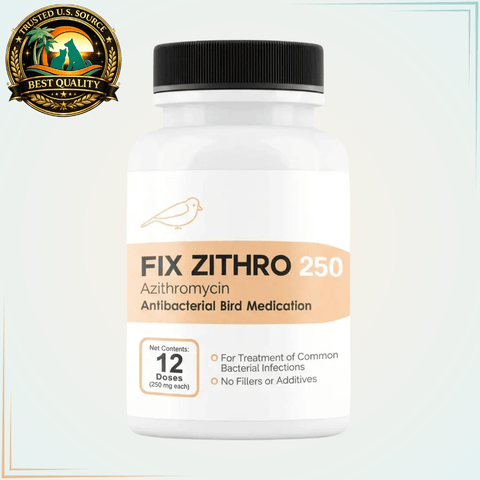

Bird Azithromycin is an ingredient-specific antibacterial category for veterinarian-directed care of non-food pet birds. Bird owners may also recognize or search for these products using the familiar name Bird Zithro.
This CalVet Supply collection organizes the currently available azithromycin products so customers can compare the active ingredient, strength, tablet quantity, storage information, current availability, and label specifications in one place.
Veterinary guidance required: A bird’s species, body weight, diagnosis, age, health status, and other treatments can materially affect product selection and administration. An avian veterinarian should determine the appropriate product, amount, method, frequency, and duration.
Important notice: Products in this collection are intended only for the non-food animals identified on their labels. They are not intended for humans, poultry raised for food, or animals producing eggs or other products for human consumption.
Shop Bird Azithromycin for Non-Food Pet Birds
Available Bird Azithromycin products should be compared according to the verified active ingredient, individual tablet strength, package quantity, intended animal category, and current label information.
For a product labeled Azithromycin 250mg, the 250mg designation ordinarily identifies the amount of azithromycin contained in each tablet. It does not represent the total amount in the bottle. Strength and tablet count should therefore be displayed separately.
What Is Bird Zithro?
Bird Zithro is a familiar product-style name used for non-food pet-bird products containing azithromycin. Azithromycin belongs to the macrolide class of antibacterial ingredients and has a different activity profile from amoxicillin, doxycycline, enrofloxacin, tylosin, and other ingredients used in avian care.
Azithromycin is not automatically appropriate whenever a bird appears unwell. Breathing changes, appetite loss, altered droppings, inactivity, and feather changes can have bacterial and non-bacterial causes. Accurate diagnosis is essential before selecting an antibacterial product.
Birds for Which Owners May Research Azithromycin
Bird owners may encounter azithromycin while researching veterinarian-directed care for different non-food companion and aviary birds, including:
- Pigeons and doves
- Parrots and parakeets
- Canaries and finches
- Cockatiels
- Budgerigars
- Macaws and cockatoos
- Other non-food aviary birds
These species vary significantly in body size, metabolism, health risks, and sensitivity. A tablet strength listed on a product page is not an administration recommendation for every bird.
Signs That Require Avian Veterinary Evaluation
Birds frequently conceal illness until a condition becomes advanced. Prompt professional evaluation is especially important when a bird displays:
- Open-mouth breathing or increased respiratory effort
- Tail bobbing while breathing
- Nasal or eye discharge
- Sneezing accompanied by lethargy or discharge
- Changes in voice or breathing sounds
- Reduced appetite or unexplained weight loss
- Persistent fluffed feathers and inactivity
- Changes in droppings
- Weakness, balance problems, or difficulty perching
These signs do not confirm a bacterial infection. Respiratory distress and other symptoms can also result from fungal disease, parasites, viruses, toxins, nutritional deficiencies, environmental irritants, or organ-related illness.
Why Diagnosis Matters Before Using Azithromycin
Azithromycin acts against susceptible bacteria and may be considered by avian veterinarians in selected bacterial or Mycoplasma-related situations. It does not treat every organism and should not be chosen solely because a bird is sneezing, inactive, or breathing differently.
A veterinarian may use the bird’s history, physical examination, body weight, diagnostic testing, microscopy, culture, or other clinical findings to determine whether bacteria are involved and which ingredient is appropriate.
Bird Azithromycin and Respiratory Concerns
“Bird respiratory infection” is a broad search term rather than a specific diagnosis. Similar outward symptoms may be associated with bacteria, Mycoplasma, fungal organisms, parasites, viruses, environmental irritants, poor ventilation, or nutritional deficiencies.
A bird showing respiratory distress should not wait for routine at-home product selection. Open-mouth breathing, pronounced tail bobbing, blue discoloration, collapse, or rapidly worsening weakness requires urgent avian veterinary attention.
Responsible Bird Azithromycin Use
Responsible use begins with an accurate body weight and veterinarian-established plan. Birds should be weighed in grams using an appropriate digital scale, and changes should be documented throughout care.
General responsible-use principles include:
- Obtain an avian veterinary evaluation before treatment.
- Confirm the exact active ingredient and strength.
- Use the administration method established for the individual bird.
- Follow the prescribed frequency and complete duration.
- Do not estimate treatment amounts from visual size alone.
- Do not combine antibacterials without veterinary direction.
- Monitor appetite, weight, droppings, breathing, and activity.
- Contact the veterinarian if symptoms worsen or new reactions appear.
Direct Administration vs. Drinking-Water Administration
The appropriate administration method must be selected by an avian veterinarian. Medication placed in drinking water can be difficult to measure accurately because water consumption varies with species, diet, temperature, health status, and individual behavior.
A sick bird may drink less than usual, while multiple birds sharing one water source may consume unequal amounts. Do not crush tablets, prepare a drinking-water mixture, or divide a product until the veterinarian has provided exact instructions for that product and bird.
Supportive Care During Veterinarian-Directed Treatment
Supportive husbandry may help reduce stress while the underlying condition is being evaluated and treated. The appropriate environment depends on the bird’s species and condition, but general considerations include:
- Providing a quiet, low-stress recovery space
- Maintaining an appropriate and stable temperature
- Keeping food and water within easy reach
- Monitoring body weight at the same time each day
- Keeping housing clean and well ventilated
- Separating a sick bird when advised
- Avoiding aerosols, smoke, fragrances, and other respiratory irritants
Supportive care is not a substitute for diagnosis or appropriate treatment, particularly when breathing, appetite, balance, or body weight is deteriorating.
Bird Azithromycin vs. Other Bird Antibacterials
Azithromycin is not interchangeable with doxycycline, tylosin, amoxicillin, enrofloxacin, or other antibacterial ingredients. Each option has a different activity profile, strength, format, and potential role in veterinarian-directed care.
If azithromycin is not the specific ingredient recommended for the bird, review the broader CalVet Supply collection to compare available avian products.
Compare All Bird Antibiotics →
How to Choose a Bird Azithromycin Product
Before ordering, verify:
- The active ingredient is azithromycin.
- The strength matches the veterinarian’s recommendation.
- The tablet quantity is correct.
- The product is intended for the appropriate non-food animal category.
- The veterinarian has provided an administration plan.
- You have reviewed the current warnings and storage information.
- The product has not expired and its packaging is intact.
Buy Bird Azithromycin Online from CalVet Supply
CalVet Supply brings available Bird Azithromycin products together in one focused collection so bird owners can compare current strengths, tablet quantities, prices, and availability. In-stock products ship from a United States warehouse according to the processing and delivery options displayed at checkout.
Frequently Asked Questions
What is Bird Azithromycin?
Bird Azithromycin refers to an azithromycin-containing antibacterial product intended for the non-food animal category stated on its label. An avian veterinarian should determine whether it is appropriate for an individual bird.
Is Bird Zithro the same as azithromycin?
Bird Zithro is a familiar product-style name used for certain non-food pet-bird products containing azithromycin. Always confirm the actual ingredient and strength on the current label.
What does Bird Azithromycin 250mg mean?
The 250mg designation ordinarily identifies the amount of azithromycin in each tablet. It is not a universal amount for every bird and does not indicate how much should be administered.
Can azithromycin be used for pigeons?
An avian veterinarian may consider azithromycin for an individual non-food pigeon when the diagnosis supports it. The veterinarian must establish the amount, administration method, frequency, and duration.
Can azithromycin be used for parrots?
Any use in a non-food pet parrot should be directed by an avian veterinarian after considering the species, body weight, diagnosis, and health status.
Does Bird Azithromycin treat every respiratory problem?
No. Respiratory symptoms may result from bacteria, Mycoplasma, fungus, parasites, viruses, irritants, toxins, or nutritional problems. Diagnosis is necessary before selecting treatment.
Can I add an azithromycin tablet to drinking water?
Do not prepare a drinking-water mixture without exact veterinary instructions. Water consumption varies, making the amount received by an individual bird difficult to control.
Can Bird Azithromycin be combined with another antibiotic?
Do not combine or alternate antibacterial products unless an avian veterinarian specifically directs the combination.
Is Bird Azithromycin intended for poultry raised for food?
No. Products in this collection are intended for non-food animals only and must not be used in birds raised for meat or human-consumption eggs.
Can these products be used by humans?
No. These products are intended only for the non-food animal use stated on their labels and are not intended for human medical use or consumption.
Where can I buy Bird Zithro online?
Available Bird Azithromycin products can be ordered through this CalVet Supply collection. Review each listing for current strength, tablet quantity, price, availability, and shipping options.
Educational notice: This collection provides general product and avian-care information. It does not replace diagnosis or treatment instructions from a qualified avian veterinarian. The current physical product label and veterinarian’s directions take priority.
