 Help & Contact
 Order Tracking


Fish Antibiotics
Fish Antibiotics for Aquarium Fish | Shop Online
Antibacterial treatments for fish, sometimes called fish antibiotics or fish antibacterials, are capsules and tablets labeled for ornamental aquarium fish, with several products also intended for non-food pet birds under veterinary guidance.
This collection brings together the antibacterial treatments in the Aqua Soma Labs Fix line. Each product is built around a clearly identified active ingredient and is supplied in a capsule or tablet format suitable for its labeled ornamental-animal use.
The collection includes amoxicillin, cephalexin, doxycycline, ciprofloxacin, metronidazole, clindamycin, penicillin, azithromycin, and the sulfamethoxazole/trimethoprim combination commonly abbreviated as SMZ/TMP.
Many aquarium keepers search using familiar product nicknames rather than ingredient names. Common searches include Fish Mox, Fish Flex, Fish Doxy, Fish Flox, Fish Zole, Fish Cin, Fish Sulfa, Fish Pen, and Bird Zithro.
Every product section below lists both the familiar nickname and the active ingredient so you can compare the name you remember with the product currently available.
Some shoppers are looking for one specific ingredient already recommended by an aquatic or avian professional. Others are comparing the available options before deciding which product page to review.
Use the comparison table, selection guide, and individual product links below to narrow the collection by ingredient, strength, form, and intended situation.
The Short Version
Ornamental-Animal Products
These products are labeled for ornamental aquarium fish, with selected products also intended for non-food pet birds under veterinary guidance.
Choose by Ingredient
Select according to the suspected problem and active ingredient rather than choosing only by popularity, bottle size, or nickname.
Use a Hospital Tank
For aquarium fish, use a separate treatment tank, remove activated carbon when directed, monitor water quality, and follow the complete label course.
Keep Bird Use Vet-Led
An avian veterinarian must select the product and determine the amount, administration method, frequency, and duration for any pet bird.
Compare Fish & Bird Treatments by Ingredient
The fastest way to narrow the collection is by active ingredient and product form.
The table below lists the Fix product, the nickname familiar to many aquarium keepers, the available ingredient strength, product form, and the type of situation for which each option is commonly considered.
Open the individual product page to review the current bottle sizes, full directions, safety information, and label-specific treatment guidance.
| Ingredient | Nickname | Form | Commonly considered for | Product |
|---|---|---|---|---|
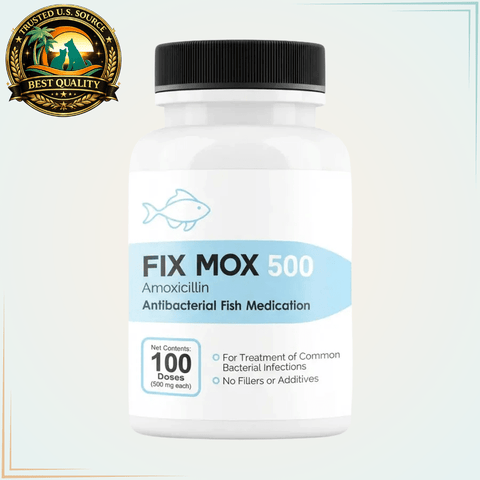
| Amoxicillin 250 mg / 500 mg | Fish Mox | Capsules | A familiar option for certain suspected bacterial problems, particularly when a susceptible Gram-positive organism may be involved | Shop Fix Mox → |
| Cephalexin 250 mg / 500 mg | Fish Flex | Capsules | Fin and tail deterioration, ulcers, infected wounds, skin lesions, and certain soft-tissue concerns | Shop Fix Flex → |
| Doxycycline 100 mg | Fish Doxy | Tablets | Columnaris-type signs, certain respiratory concerns, and situations where a doxycycline tablet format is preferred | Shop Fix Doxy → |
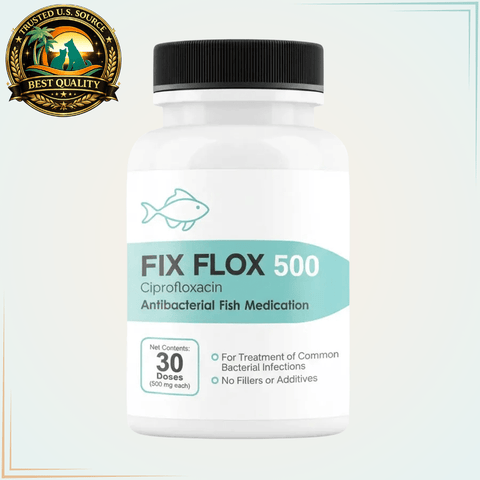
| Ciprofloxacin 500 mg | Fish Flox | Capsules | Persistent bacterial concerns, including certain Gram-negative problems, ulcer-like sores, columnaris-type patches, and septicemia-like signs | Shop Fix Flox → |
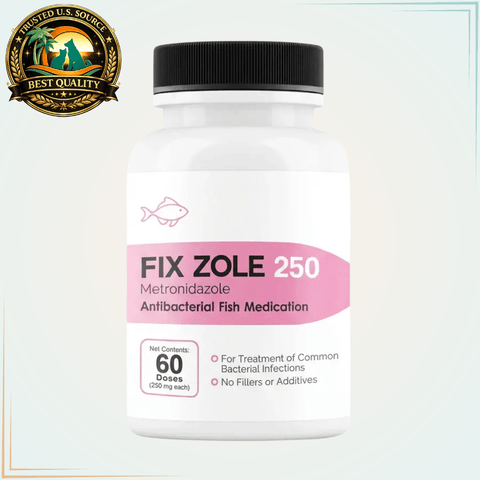
| Metronidazole 250 mg / 500 mg | Fish Zole | Tablets | Certain internal protozoal concerns, anaerobic-sensitive organisms, Hexamita, Spironucleus, and related signs | Shop Fix Zole → |
| Clindamycin 150 mg | Fish Cin | Capsules | Certain suspected Gram-positive bacterial concerns involving skin, mouth, wounds, lesions, and soft tissue | Shop Fix Cin → |
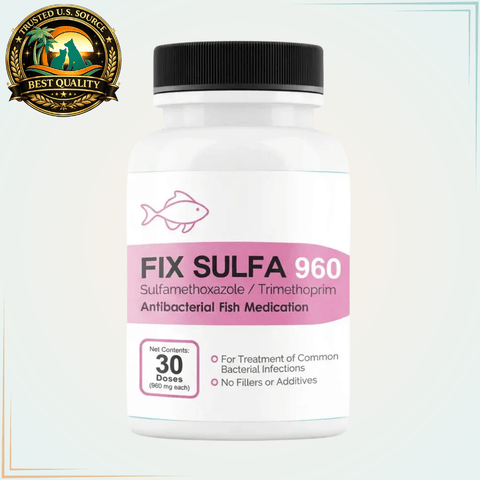
| Sulfamethoxazole 800 mg / Trimethoprim 160 mg | Fish Sulfa | Tablets | A dual-ingredient SMZ/TMP combination considered for a range of susceptible bacterial concerns | Shop Fix Sulfa → |
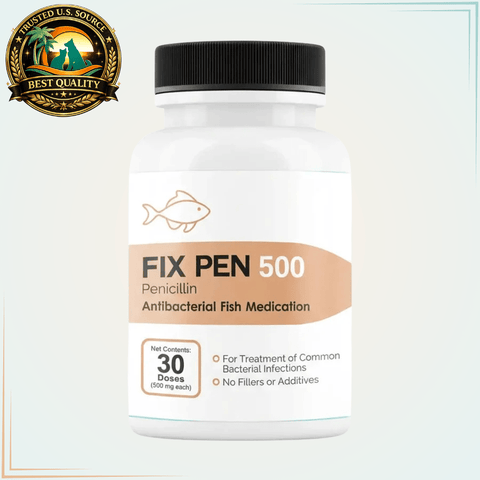
| Penicillin V Potassium 500 mg | Fish Pen | Tablets | Certain susceptible Gram-positive bacterial concerns, including wounds, ulcers, mouth problems, and fin deterioration | Shop Fix Pen → |
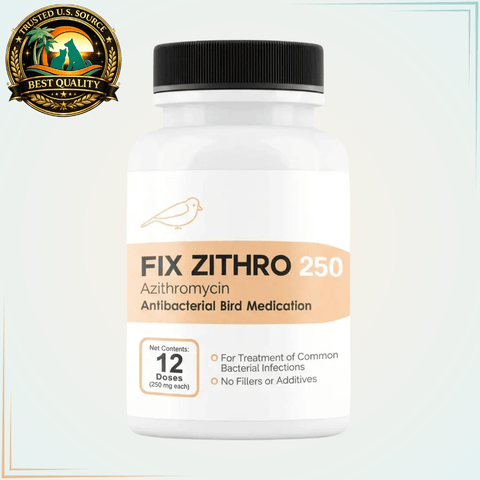
| Azithromycin 250 mg | Fish Zithro / Bird Zithro | Tablets | Certain fish bacterial concerns and veterinarian-directed respiratory or Mycoplasma-related care for non-food pet birds | Shop Fix Zithro → |
Selection Tip: The appropriate product depends on the likely cause rather than price, bottle count, or popularity. Similar symptoms may be caused by bacteria, fungus, parasites, injury, poor water quality, or environmental stress. Review the selection guide below and consult an aquatic or avian professional whenever the cause is unclear.
Why Aquarium Fish and Pet Birds Sometimes Need Antibacterial Treatment
Aquarium fish and pet birds may develop health problems after common environmental or husbandry-related stressors.
Antibacterial treatment may form part of the response when the signs, history, and professional assessment suggest that susceptible bacteria are involved.
Water-Quality Problems
Rising ammonia, nitrite, unstable pH, low oxygen, or poor maintenance can damage the protective skin and gills and make fish more vulnerable to opportunistic organisms.
New Arrivals Without Quarantine
New fish or birds may introduce organisms into an established aquarium or aviary before visible symptoms develop.
Temperature and Environmental Stress
Sudden temperature changes, overcrowding, transport, aggression, poor housing, and unstable conditions can weaken normal defenses.
Opportunistic Bacterial Growth
Injured, stressed, or already weakened animals may become more vulnerable to bacteria that would not normally cause a serious problem.
Treatment works best alongside the basics: stable water quality, appropriate temperature, strong aeration, clean housing, suitable nutrition, and reduced stress.
Applying an antibacterial treatment without correcting the underlying environmental problem may delay recovery or allow the symptoms to return.
Match the Signs to a Likely Cause
Look Carefully at the Visible Signs
Frayed fins, open sores, red streaking, cloudy eyes, body lesions, appetite loss, and reduced activity may be associated with bacterial stress in aquarium fish.
In birds, fluffed feathers, changed droppings, reduced appetite, breathing changes, and inactivity may signal illness but are not proof of a bacterial cause.
Rule Out Water Quality First
Test ammonia, nitrite, temperature, pH, and oxygen conditions before adding treatment.
Poor water quality can imitate disease, cause similar visible signs, and reduce the effectiveness of any treatment added afterward.
Protect the Display Aquarium
A separate hospital or quarantine tank helps protect plants, shrimp, snails, corals, healthy fish, and the beneficial bacteria supporting the main aquarium's biological filter.
Keep All Bird Treatment Veterinarian-Led
Bird species, size, weight, diagnosis, and health status affect the appropriate product and amount.
An avian veterinarian must select the product and establish the administration method, frequency, and treatment duration.
Use responsibly: Incorrect or unnecessary treatment can stress the animal, disturb the aquarium, delay the correct care, and contribute to reduced antibacterial effectiveness. Follow the current product label and seek professional guidance when the diagnosis is uncertain.
How to Choose the Right Fish or Bird Antibacterial
There is no single product that is best for every bacterial concern.
The appropriate choice depends on the animal, visible signs, likely cause, active ingredient, treatment format, and instructions printed on the current product label.
Decide Whether You Are Treating Fish or a Bird
For ornamental aquarium fish, product-label directions are generally based on the actual volume of water in a treatment tank.
For non-food pet birds, do not use aquarium calculations. An avian veterinarian must determine the appropriate product and amount according to the bird's species, weight, diagnosis, and overall condition.
Identify the Most Likely Type of Problem
Fin and tail deterioration, ulcers, infected wounds, red streaking, and cloudy eyes are external signs.
Swelling, bloating, appetite loss, unusual droppings, sudden inactivity, or balance problems may suggest a deeper or systemic concern.
These signs can also result from fungus, parasites, injury, toxins, or poor water quality, so avoid choosing an antibacterial solely from one symptom.
Compare the Ingredient and Activity Profile
Amoxicillin and penicillin are commonly associated with susceptible Gram-positive bacteria.
Ciprofloxacin is generally considered for a wider range of Gram-negative bacterial concerns.
SMZ/TMP combines sulfamethoxazole and trimethoprim, while metronidazole is more closely associated with anaerobic organisms and certain protozoa than with ordinary bacterial fin problems.
Choose a Form You Can Prepare Accurately
Capsules can usually be opened and mixed into aquarium water.
Tablets may be pre-dissolved or dispersed according to the individual label.
Choose the strength and format that allow you to calculate the actual treatment-water volume accurately.
Confirm Freshwater or Saltwater Compatibility
Many products in this collection are presented for freshwater and saltwater treatment systems.
The safer approach is still to use a dedicated hospital tank rather than treating a planted community aquarium or reef display containing sensitive invertebrates.
Ingredient Groups at a Glance
Amoxicillin, Cephalexin, Penicillin & Clindamycin
These ingredients are commonly compared for certain susceptible bacterial concerns involving fins, skin, mouth tissue, wounds, ulcers, and other soft-tissue signs.
Ciprofloxacin, Doxycycline, Azithromycin & SMZ/TMP
These products may be considered for different bacterial activity profiles, including certain persistent or Gram-negative concerns, according to diagnosis and label instructions.
Metronidazole
Metronidazole is generally associated with certain anaerobic organisms and protozoal concerns, including Hexamita and Spironucleus, rather than ordinary external bacterial fin problems.
Responsible Selection: Keeping a product available does not mean it should be used automatically. Avoid changing ingredients repeatedly or combining products without understanding the likely cause. When symptoms spread, return, or fail to improve, seek aquatic or avian professional guidance.
Buying Fish & Bird Antibacterials Online
Ordering in advance allows aquarium keepers to keep an appropriate, clearly labeled product available rather than beginning the search only after symptoms appear.
A severe, rapidly spreading, recurring, or unclear problem still requires professional evaluation, and every pet-bird treatment plan should be established by an avian veterinarian.
United States Warehouse
Products in this collection ship from our United States warehouse rather than waiting for an overseas order.
Bottles are supplied with clearly printed ingredients, strengths, storage information, and expiration dates.
Same-Day Dispatch Schedule
Qualifying in-stock orders placed before 1:30 p.m. CT, Monday through Friday, may dispatch the same business day.
Orders placed after the cutoff, during a weekend, or on a holiday process on the next available business day.
Rates and Delivery Estimates
Shipping costs and estimated delivery times are calculated at checkout according to the destination and selected USPS or UPS service.
Review Shipping Policy →Returns and Order Issues
Eligible products may qualify for a return or exchange within 30 days according to the current California Vet Supply store guidelines.
Review Refund Policy →How to Use Fish & Bird Antibacterials Responsibly
The directions printed on the current product label take priority over general collection information.
Several basic practices apply across most aquarium treatment plans and help prevent treatment from creating additional problems.
Treat in a Hospital Tank
A separate hospital or quarantine tank limits exposure of healthy animals, allows closer observation, and protects plants, invertebrates, and the main aquarium's biological filtration.
Remove Carbon and Review UV Use
Activated carbon and other chemical media may remove treatment from the water. Remove them when directed and switch off UV sterilization when required by the individual product label.
Monitor Water Throughout Treatment
Test ammonia and nitrite, maintain stable temperature, provide strong aeration, and perform appropriate water changes when the treatment plan requires them.
Finish the Course and Avoid Mixing
Complete the label-directed treatment unless a veterinarian advises otherwise. Do not combine multiple products or rotate ingredients without professional guidance.
Why Choose California Vet Supply
California Vet Supply brings the Aqua Soma Labs Fix range together in one collection so aquarium keepers and bird owners can compare active ingredients, strengths, formats, and current product options in one place.
Genuine Fix Line Products
Products are supplied in their original Aqua Soma Labs Fix packaging with the ingredient, strength, storage information, and warnings printed on the label.
Clear Strengths and Current Dates
Product listings clearly separate the available strengths and bottle counts so shoppers can match the correct option without relying only on a familiar nickname.
United States Dispatch
In-stock orders ship from a United States warehouse according to the current California Vet Supply processing schedule.
The Full Line in One Collection
Compare amoxicillin, cephalexin, doxycycline, ciprofloxacin, metronidazole, clindamycin, SMZ/TMP, penicillin, and azithromycin without searching multiple sellers.
Frequently Asked Questions
What are fish antibacterial treatments?
Fish antibacterial treatments are capsules or tablets labeled for certain suspected bacterial problems in ornamental aquarium fish. Individual products contain ingredients such as amoxicillin, cephalexin, doxycycline, ciprofloxacin, penicillin, clindamycin, azithromycin, or SMZ/TMP.
Which fish antibacterial should I choose?
Choose according to the likely cause, active ingredient, fish symptoms, actual treatment-water volume, and the current product label.
When the cause is uncertain, correct water-quality problems first and seek guidance from an aquatic professional rather than selecting only by popularity.
Where can I buy fish and bird antibacterials online?
California Vet Supply offers the Aqua Soma Labs Fix line through this online collection, with individual listings for the available ingredients, strengths, and bottle sizes.
How fast do orders ship, and where do they ship from?
In-stock orders ship from our United States warehouse. Qualifying orders placed before 1:30 p.m. CT, Monday through Friday, may dispatch the same business day.
Do these products work in freshwater and saltwater treatment tanks?
Many products in this collection are presented for freshwater and saltwater hospital tanks. Always confirm compatibility on the current individual product label before use.
Should I treat fish in the display tank or a hospital tank?
A separate hospital or quarantine tank is strongly preferred. It allows more accurate treatment and protects healthy fish, plants, sensitive invertebrates, and the main aquarium's biological filtration.
Do I need to remove activated carbon or switch off UV?
Activated carbon and other chemical filtration media may remove treatment from aquarium water and are commonly removed during treatment.
UV sterilization may also need to be switched off. Follow the current directions for the specific product.
Will antibacterial treatment harm the biofilter?
Some antibacterial treatments may disturb beneficial filtration bacteria. Use a separate treatment tank whenever possible and monitor ammonia and nitrite throughout treatment.
How do I calculate the amount by aquarium size?
Follow the individual product label and calculate using the actual water volume being treated.
Substrate, rocks, decorations, filters, and the aquarium fill level reduce the real water volume compared with the advertised tank capacity.
How long does a typical treatment last?
Treatment length differs by ingredient and label. Many aquarium treatment plans run for several consecutive days, but the exact schedule on the current product bottle must be followed.
How quickly should I see improvement?
Some fish may show improving appetite, activity, breathing, fin condition, or reduced lesion progression within several days.
Stop and reassess according to the label when the fish worsen or no improvement appears within the stated evaluation period.
Can I combine two different antibacterial treatments?
Do not combine products unless the labels permit the combination or a qualified aquatic or avian veterinarian specifically recommends it.
Combining treatments may increase animal stress, disturb water quality, or make reactions harder to identify.
What are the main differences between the ingredients?
Each ingredient has a different activity profile. Amoxicillin, cephalexin, penicillin, clindamycin, doxycycline, ciprofloxacin, azithromycin, and SMZ/TMP are compared for different bacterial situations.
Metronidazole is more closely associated with certain anaerobic organisms and protozoal concerns.
Do fish antibacterials treat fungal or parasitic problems?
No. Antibacterial products should not be expected to treat true fungal infections, ich, flukes, worms, viral disease, or other non-bacterial problems.
Can these products be used for pet birds?
Selected products may be considered for non-food pet birds only under avian veterinary guidance.
The veterinarian must choose the product and determine the amount, administration method, frequency, and duration.
Can I use these products with shrimp, snails, corals, or live plants?
Treat affected fish in a separate hospital tank whenever possible. Sensitivity varies, and antibacterial treatment may harm invertebrates, disturb plants, or disrupt the display aquarium ecosystem.
Are these products intended for food fish or food-producing birds?
No. Products in this collection are intended for ornamental aquarium fish and non-food pet birds only.
How should I store fish and bird antibacterial products?
Store each product in its original, tightly closed container in a cool, dry location protected from direct sunlight, excessive heat, and moisture.
Keep all products out of reach of children and animals and follow the storage temperature printed on the bottle.
What happened to the older Thomas Labs fish products?
Many older Thomas Labs names were discontinued. The Aqua Soma Labs Fix line is presented as the current replacement range using familiar ingredients, strengths, and updated Fix branding.
What signs may suggest a bacterial problem in aquarium fish?
Possible signs include frayed fins, open sores, ulcers, red streaking, cloudy eyes, mouth damage, swelling, appetite loss, reduced activity, and lesions that continue after water quality has been corrected.
These signs are not proof of a bacterial cause and may also result from parasites, fungus, injury, toxins, or poor environmental conditions.
Browse the Full Fix Line
Fix Mox 250 mg / 500 mg
Amoxicillin capsules known to aquarium keepers as Fish Mox, available in multiple strengths and bottle counts.
Shop Fix Mox →Fix Flex 250 mg / 500 mg
Cephalexin capsules commonly compared for fin deterioration, ulcers, infected wounds, and bacterial skin concerns.
Shop Fix Flex →Fix Doxy 100 mg
Doxycycline tablets for ornamental fish and selected veterinarian-directed non-food pet-bird care.
Shop Fix Doxy →Fix Flox 500 mg
Ciprofloxacin capsules considered for certain persistent and Gram-negative bacterial concerns in ornamental aquarium fish.
Shop Fix Flox →Fix Zole 250 mg / 500 mg
Metronidazole tablets used for certain anaerobic-sensitive organisms and protozoal concerns such as Hexamita and Spironucleus.
Shop Fix Zole →Fix Cin 150 mg
Clindamycin capsules considered for certain bacterial skin, mouth, wound, lesion, and soft-tissue concerns.
Shop Fix Cin →Fix Sulfa 960 mg
A dual-ingredient sulfamethoxazole and trimethoprim tablet for a range of susceptible bacterial concerns.
Shop Fix Sulfa →Fix Pen 500 mg
Penicillin V Potassium tablets considered for certain susceptible Gram-positive bacterial concerns in ornamental fish.
Shop Fix Pen →Fix Zithro 250 mg
Azithromycin tablets for selected fish bacterial concerns and veterinarian-directed care for non-food pet birds.
Shop Fix Zithro →Transparency & Verification
How California Vet Supply reviews collection information
Who is responsible for this page: The California Vet Supply editorial team responsible for reviewing and maintaining collection and product information.
Verification snapshot: Ingredient names, product strengths, forms, intended species, and general safety information are reviewed against available product labels and specifications before publishing.
How We Verify Product Information
Label-First Directions
The physical bottle label is treated as the primary source for treatment amounts, frequency, duration, storage instructions, and warnings.
Ingredient and Strength Checks
Active ingredients, capsule or tablet strengths, and bottle counts are cross-checked against available manufacturer information.
Collection Consistency
Product nicknames, active ingredients, forms, and links are reviewed for consistency across the collection and individual product pages.
Ongoing Updates
Collection information is updated when product labels, packaging, strengths, bottle counts, availability, or manufacturer details change.
See information that does not match the product received? Please contact California Vet Supply so the page can be reviewed and updated.










Fish Antibiotics for Aquarium Fish | Shop Online
Antibacterial treatments for fish, sometimes called fish antibiotics or fish antibacterials, are capsules and tablets labeled for ornamental aquarium fish, with several products also intended for non-food pet birds under veterinary guidance.
This collection brings together the antibacterial treatments in the Aqua Soma Labs Fix line. Each product is built around a clearly identified active ingredient and is supplied in a capsule or tablet format suitable for its labeled ornamental-animal use.
The collection includes amoxicillin, cephalexin, doxycycline, ciprofloxacin, metronidazole, clindamycin, penicillin, azithromycin, and the sulfamethoxazole/trimethoprim combination commonly abbreviated as SMZ/TMP.
Many aquarium keepers search using familiar product nicknames rather than ingredient names. Common searches include Fish Mox, Fish Flex, Fish Doxy, Fish Flox, Fish Zole, Fish Cin, Fish Sulfa, Fish Pen, and Bird Zithro.
Every product section below lists both the familiar nickname and the active ingredient so you can compare the name you remember with the product currently available.
Some shoppers are looking for one specific ingredient already recommended by an aquatic or avian professional. Others are comparing the available options before deciding which product page to review.
Use the comparison table, selection guide, and individual product links below to narrow the collection by ingredient, strength, form, and intended situation.
The Short Version
Ornamental-Animal Products
These products are labeled for ornamental aquarium fish, with selected products also intended for non-food pet birds under veterinary guidance.
Choose by Ingredient
Select according to the suspected problem and active ingredient rather than choosing only by popularity, bottle size, or nickname.
Use a Hospital Tank
For aquarium fish, use a separate treatment tank, remove activated carbon when directed, monitor water quality, and follow the complete label course.
Keep Bird Use Vet-Led
An avian veterinarian must select the product and determine the amount, administration method, frequency, and duration for any pet bird.
Compare Fish & Bird Treatments by Ingredient
The fastest way to narrow the collection is by active ingredient and product form.
The table below lists the Fix product, the nickname familiar to many aquarium keepers, the available ingredient strength, product form, and the type of situation for which each option is commonly considered.
Open the individual product page to review the current bottle sizes, full directions, safety information, and label-specific treatment guidance.
| Ingredient | Nickname | Form | Commonly considered for | Product |
|---|---|---|---|---|
| Amoxicillin 250 mg / 500 mg | Fish Mox | Capsules | A familiar option for certain suspected bacterial problems, particularly when a susceptible Gram-positive organism may be involved | Shop Fix Mox → |
| Cephalexin 250 mg / 500 mg | Fish Flex | Capsules | Fin and tail deterioration, ulcers, infected wounds, skin lesions, and certain soft-tissue concerns | Shop Fix Flex → |
| Doxycycline 100 mg | Fish Doxy | Tablets | Columnaris-type signs, certain respiratory concerns, and situations where a doxycycline tablet format is preferred | Shop Fix Doxy → |
| Ciprofloxacin 500 mg | Fish Flox | Capsules | Persistent bacterial concerns, including certain Gram-negative problems, ulcer-like sores, columnaris-type patches, and septicemia-like signs | Shop Fix Flox → |
| Metronidazole 250 mg / 500 mg | Fish Zole | Tablets | Certain internal protozoal concerns, anaerobic-sensitive organisms, Hexamita, Spironucleus, and related signs | Shop Fix Zole → |
| Clindamycin 150 mg | Fish Cin | Capsules | Certain suspected Gram-positive bacterial concerns involving skin, mouth, wounds, lesions, and soft tissue | Shop Fix Cin → |
| Sulfamethoxazole 800 mg / Trimethoprim 160 mg | Fish Sulfa | Tablets | A dual-ingredient SMZ/TMP combination considered for a range of susceptible bacterial concerns | Shop Fix Sulfa → |
| Penicillin V Potassium 500 mg | Fish Pen | Tablets | Certain susceptible Gram-positive bacterial concerns, including wounds, ulcers, mouth problems, and fin deterioration | Shop Fix Pen → |
| Azithromycin 250 mg | Fish Zithro / Bird Zithro | Tablets | Certain fish bacterial concerns and veterinarian-directed respiratory or Mycoplasma-related care for non-food pet birds | Shop Fix Zithro → |
Selection Tip: The appropriate product depends on the likely cause rather than price, bottle count, or popularity. Similar symptoms may be caused by bacteria, fungus, parasites, injury, poor water quality, or environmental stress. Review the selection guide below and consult an aquatic or avian professional whenever the cause is unclear.
Why Aquarium Fish and Pet Birds Sometimes Need Antibacterial Treatment
Aquarium fish and pet birds may develop health problems after common environmental or husbandry-related stressors.
Antibacterial treatment may form part of the response when the signs, history, and professional assessment suggest that susceptible bacteria are involved.
Water-Quality Problems
Rising ammonia, nitrite, unstable pH, low oxygen, or poor maintenance can damage the protective skin and gills and make fish more vulnerable to opportunistic organisms.
New Arrivals Without Quarantine
New fish or birds may introduce organisms into an established aquarium or aviary before visible symptoms develop.
Temperature and Environmental Stress
Sudden temperature changes, overcrowding, transport, aggression, poor housing, and unstable conditions can weaken normal defenses.
Opportunistic Bacterial Growth
Injured, stressed, or already weakened animals may become more vulnerable to bacteria that would not normally cause a serious problem.
Treatment works best alongside the basics: stable water quality, appropriate temperature, strong aeration, clean housing, suitable nutrition, and reduced stress.
Applying an antibacterial treatment without correcting the underlying environmental problem may delay recovery or allow the symptoms to return.
Match the Signs to a Likely Cause
Look Carefully at the Visible Signs
Frayed fins, open sores, red streaking, cloudy eyes, body lesions, appetite loss, and reduced activity may be associated with bacterial stress in aquarium fish.
In birds, fluffed feathers, changed droppings, reduced appetite, breathing changes, and inactivity may signal illness but are not proof of a bacterial cause.
Rule Out Water Quality First
Test ammonia, nitrite, temperature, pH, and oxygen conditions before adding treatment.
Poor water quality can imitate disease, cause similar visible signs, and reduce the effectiveness of any treatment added afterward.
Protect the Display Aquarium
A separate hospital or quarantine tank helps protect plants, shrimp, snails, corals, healthy fish, and the beneficial bacteria supporting the main aquarium's biological filter.
Keep All Bird Treatment Veterinarian-Led
Bird species, size, weight, diagnosis, and health status affect the appropriate product and amount.
An avian veterinarian must select the product and establish the administration method, frequency, and treatment duration.
Use responsibly: Incorrect or unnecessary treatment can stress the animal, disturb the aquarium, delay the correct care, and contribute to reduced antibacterial effectiveness. Follow the current product label and seek professional guidance when the diagnosis is uncertain.
How to Choose the Right Fish or Bird Antibacterial
There is no single product that is best for every bacterial concern.
The appropriate choice depends on the animal, visible signs, likely cause, active ingredient, treatment format, and instructions printed on the current product label.
Decide Whether You Are Treating Fish or a Bird
For ornamental aquarium fish, product-label directions are generally based on the actual volume of water in a treatment tank.
For non-food pet birds, do not use aquarium calculations. An avian veterinarian must determine the appropriate product and amount according to the bird's species, weight, diagnosis, and overall condition.
Identify the Most Likely Type of Problem
Fin and tail deterioration, ulcers, infected wounds, red streaking, and cloudy eyes are external signs.
Swelling, bloating, appetite loss, unusual droppings, sudden inactivity, or balance problems may suggest a deeper or systemic concern.
These signs can also result from fungus, parasites, injury, toxins, or poor water quality, so avoid choosing an antibacterial solely from one symptom.
Compare the Ingredient and Activity Profile
Amoxicillin and penicillin are commonly associated with susceptible Gram-positive bacteria.
Ciprofloxacin is generally considered for a wider range of Gram-negative bacterial concerns.
SMZ/TMP combines sulfamethoxazole and trimethoprim, while metronidazole is more closely associated with anaerobic organisms and certain protozoa than with ordinary bacterial fin problems.
Choose a Form You Can Prepare Accurately
Capsules can usually be opened and mixed into aquarium water.
Tablets may be pre-dissolved or dispersed according to the individual label.
Choose the strength and format that allow you to calculate the actual treatment-water volume accurately.
Confirm Freshwater or Saltwater Compatibility
Many products in this collection are presented for freshwater and saltwater treatment systems.
The safer approach is still to use a dedicated hospital tank rather than treating a planted community aquarium or reef display containing sensitive invertebrates.
Ingredient Groups at a Glance
Amoxicillin, Cephalexin, Penicillin & Clindamycin
These ingredients are commonly compared for certain susceptible bacterial concerns involving fins, skin, mouth tissue, wounds, ulcers, and other soft-tissue signs.
Ciprofloxacin, Doxycycline, Azithromycin & SMZ/TMP
These products may be considered for different bacterial activity profiles, including certain persistent or Gram-negative concerns, according to diagnosis and label instructions.
Metronidazole
Metronidazole is generally associated with certain anaerobic organisms and protozoal concerns, including Hexamita and Spironucleus, rather than ordinary external bacterial fin problems.
Responsible Selection: Keeping a product available does not mean it should be used automatically. Avoid changing ingredients repeatedly or combining products without understanding the likely cause. When symptoms spread, return, or fail to improve, seek aquatic or avian professional guidance.
Buying Fish & Bird Antibacterials Online
Ordering in advance allows aquarium keepers to keep an appropriate, clearly labeled product available rather than beginning the search only after symptoms appear.
A severe, rapidly spreading, recurring, or unclear problem still requires professional evaluation, and every pet-bird treatment plan should be established by an avian veterinarian.
United States Warehouse
Products in this collection ship from our United States warehouse rather than waiting for an overseas order.
Bottles are supplied with clearly printed ingredients, strengths, storage information, and expiration dates.
Same-Day Dispatch Schedule
Qualifying in-stock orders placed before 1:30 p.m. CT, Monday through Friday, may dispatch the same business day.
Orders placed after the cutoff, during a weekend, or on a holiday process on the next available business day.
Rates and Delivery Estimates
Shipping costs and estimated delivery times are calculated at checkout according to the destination and selected USPS or UPS service.
Review Shipping Policy →Returns and Order Issues
Eligible products may qualify for a return or exchange within 30 days according to the current California Vet Supply store guidelines.
Review Refund Policy →How to Use Fish & Bird Antibacterials Responsibly
The directions printed on the current product label take priority over general collection information.
Several basic practices apply across most aquarium treatment plans and help prevent treatment from creating additional problems.
Treat in a Hospital Tank
A separate hospital or quarantine tank limits exposure of healthy animals, allows closer observation, and protects plants, invertebrates, and the main aquarium's biological filtration.
Remove Carbon and Review UV Use
Activated carbon and other chemical media may remove treatment from the water. Remove them when directed and switch off UV sterilization when required by the individual product label.
Monitor Water Throughout Treatment
Test ammonia and nitrite, maintain stable temperature, provide strong aeration, and perform appropriate water changes when the treatment plan requires them.
Finish the Course and Avoid Mixing
Complete the label-directed treatment unless a veterinarian advises otherwise. Do not combine multiple products or rotate ingredients without professional guidance.
Why Choose California Vet Supply
California Vet Supply brings the Aqua Soma Labs Fix range together in one collection so aquarium keepers and bird owners can compare active ingredients, strengths, formats, and current product options in one place.
Genuine Fix Line Products
Products are supplied in their original Aqua Soma Labs Fix packaging with the ingredient, strength, storage information, and warnings printed on the label.
Clear Strengths and Current Dates
Product listings clearly separate the available strengths and bottle counts so shoppers can match the correct option without relying only on a familiar nickname.
United States Dispatch
In-stock orders ship from a United States warehouse according to the current California Vet Supply processing schedule.
The Full Line in One Collection
Compare amoxicillin, cephalexin, doxycycline, ciprofloxacin, metronidazole, clindamycin, SMZ/TMP, penicillin, and azithromycin without searching multiple sellers.
Frequently Asked Questions
What are fish antibacterial treatments?
Fish antibacterial treatments are capsules or tablets labeled for certain suspected bacterial problems in ornamental aquarium fish. Individual products contain ingredients such as amoxicillin, cephalexin, doxycycline, ciprofloxacin, penicillin, clindamycin, azithromycin, or SMZ/TMP.
Which fish antibacterial should I choose?
Choose according to the likely cause, active ingredient, fish symptoms, actual treatment-water volume, and the current product label.
When the cause is uncertain, correct water-quality problems first and seek guidance from an aquatic professional rather than selecting only by popularity.
Where can I buy fish and bird antibacterials online?
California Vet Supply offers the Aqua Soma Labs Fix line through this online collection, with individual listings for the available ingredients, strengths, and bottle sizes.
How fast do orders ship, and where do they ship from?
In-stock orders ship from our United States warehouse. Qualifying orders placed before 1:30 p.m. CT, Monday through Friday, may dispatch the same business day.
Do these products work in freshwater and saltwater treatment tanks?
Many products in this collection are presented for freshwater and saltwater hospital tanks. Always confirm compatibility on the current individual product label before use.
Should I treat fish in the display tank or a hospital tank?
A separate hospital or quarantine tank is strongly preferred. It allows more accurate treatment and protects healthy fish, plants, sensitive invertebrates, and the main aquarium's biological filtration.
Do I need to remove activated carbon or switch off UV?
Activated carbon and other chemical filtration media may remove treatment from aquarium water and are commonly removed during treatment.
UV sterilization may also need to be switched off. Follow the current directions for the specific product.
Will antibacterial treatment harm the biofilter?
Some antibacterial treatments may disturb beneficial filtration bacteria. Use a separate treatment tank whenever possible and monitor ammonia and nitrite throughout treatment.
How do I calculate the amount by aquarium size?
Follow the individual product label and calculate using the actual water volume being treated.
Substrate, rocks, decorations, filters, and the aquarium fill level reduce the real water volume compared with the advertised tank capacity.
How long does a typical treatment last?
Treatment length differs by ingredient and label. Many aquarium treatment plans run for several consecutive days, but the exact schedule on the current product bottle must be followed.
How quickly should I see improvement?
Some fish may show improving appetite, activity, breathing, fin condition, or reduced lesion progression within several days.
Stop and reassess according to the label when the fish worsen or no improvement appears within the stated evaluation period.
Can I combine two different antibacterial treatments?
Do not combine products unless the labels permit the combination or a qualified aquatic or avian veterinarian specifically recommends it.
Combining treatments may increase animal stress, disturb water quality, or make reactions harder to identify.
What are the main differences between the ingredients?
Each ingredient has a different activity profile. Amoxicillin, cephalexin, penicillin, clindamycin, doxycycline, ciprofloxacin, azithromycin, and SMZ/TMP are compared for different bacterial situations.
Metronidazole is more closely associated with certain anaerobic organisms and protozoal concerns.
Do fish antibacterials treat fungal or parasitic problems?
No. Antibacterial products should not be expected to treat true fungal infections, ich, flukes, worms, viral disease, or other non-bacterial problems.
Can these products be used for pet birds?
Selected products may be considered for non-food pet birds only under avian veterinary guidance.
The veterinarian must choose the product and determine the amount, administration method, frequency, and duration.
Can I use these products with shrimp, snails, corals, or live plants?
Treat affected fish in a separate hospital tank whenever possible. Sensitivity varies, and antibacterial treatment may harm invertebrates, disturb plants, or disrupt the display aquarium ecosystem.
Are these products intended for food fish or food-producing birds?
No. Products in this collection are intended for ornamental aquarium fish and non-food pet birds only.
How should I store fish and bird antibacterial products?
Store each product in its original, tightly closed container in a cool, dry location protected from direct sunlight, excessive heat, and moisture.
Keep all products out of reach of children and animals and follow the storage temperature printed on the bottle.
What happened to the older Thomas Labs fish products?
Many older Thomas Labs names were discontinued. The Aqua Soma Labs Fix line is presented as the current replacement range using familiar ingredients, strengths, and updated Fix branding.
What signs may suggest a bacterial problem in aquarium fish?
Possible signs include frayed fins, open sores, ulcers, red streaking, cloudy eyes, mouth damage, swelling, appetite loss, reduced activity, and lesions that continue after water quality has been corrected.
These signs are not proof of a bacterial cause and may also result from parasites, fungus, injury, toxins, or poor environmental conditions.
Browse the Full Fix Line
Fix Mox 250 mg / 500 mg
Amoxicillin capsules known to aquarium keepers as Fish Mox, available in multiple strengths and bottle counts.
Shop Fix Mox →Fix Flex 250 mg / 500 mg
Cephalexin capsules commonly compared for fin deterioration, ulcers, infected wounds, and bacterial skin concerns.
Shop Fix Flex →Fix Doxy 100 mg
Doxycycline tablets for ornamental fish and selected veterinarian-directed non-food pet-bird care.
Shop Fix Doxy →Fix Flox 500 mg
Ciprofloxacin capsules considered for certain persistent and Gram-negative bacterial concerns in ornamental aquarium fish.
Shop Fix Flox →Fix Zole 250 mg / 500 mg
Metronidazole tablets used for certain anaerobic-sensitive organisms and protozoal concerns such as Hexamita and Spironucleus.
Shop Fix Zole →Fix Cin 150 mg
Clindamycin capsules considered for certain bacterial skin, mouth, wound, lesion, and soft-tissue concerns.
Shop Fix Cin →Fix Sulfa 960 mg
A dual-ingredient sulfamethoxazole and trimethoprim tablet for a range of susceptible bacterial concerns.
Shop Fix Sulfa →Fix Pen 500 mg
Penicillin V Potassium tablets considered for certain susceptible Gram-positive bacterial concerns in ornamental fish.
Shop Fix Pen →Fix Zithro 250 mg
Azithromycin tablets for selected fish bacterial concerns and veterinarian-directed care for non-food pet birds.
Shop Fix Zithro →Transparency & Verification
How California Vet Supply reviews collection information
Who is responsible for this page: The California Vet Supply editorial team responsible for reviewing and maintaining collection and product information.
Verification snapshot: Ingredient names, product strengths, forms, intended species, and general safety information are reviewed against available product labels and specifications before publishing.
How We Verify Product Information
Label-First Directions
The physical bottle label is treated as the primary source for treatment amounts, frequency, duration, storage instructions, and warnings.
Ingredient and Strength Checks
Active ingredients, capsule or tablet strengths, and bottle counts are cross-checked against available manufacturer information.
Collection Consistency
Product nicknames, active ingredients, forms, and links are reviewed for consistency across the collection and individual product pages.
Ongoing Updates
Collection information is updated when product labels, packaging, strengths, bottle counts, availability, or manufacturer details change.
See information that does not match the product received? Please contact California Vet Supply so the page can be reviewed and updated.
