Help & Contact
 Order Tracking


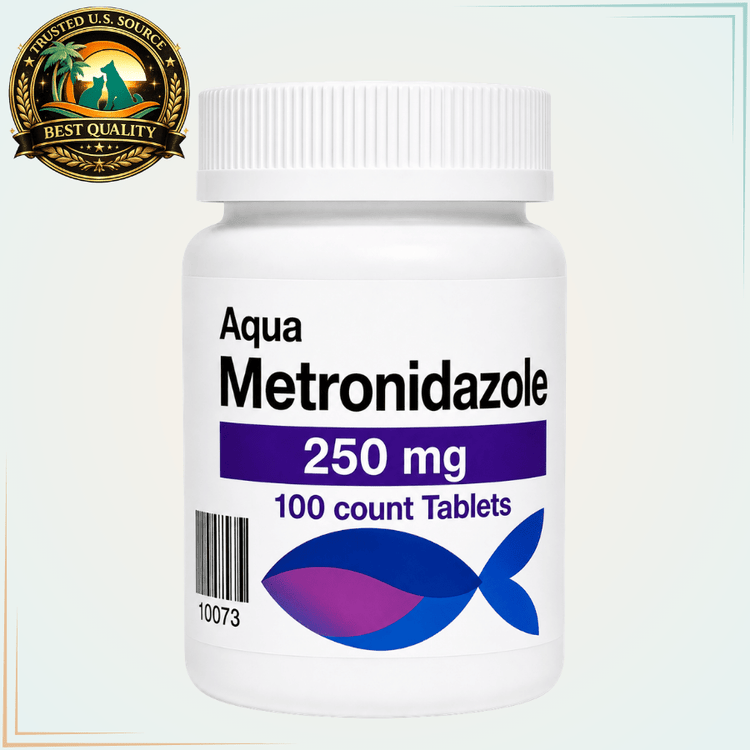
Aquarium Metronidazole 250mg for Hexamita & Protozoa - 100 Tablets
Regular price $79.95
In Stock
- FREE 1-3 day shipping over $49
CAL-AQ-METRONI-250-100-T
Category:
Shipping Estimates & Rates
- Ground Advantage 3–7 Days
- Priority Mail 2–4 Days
- Priority Mail Express 1–2 Days
- UPS® Ground 3–5 Days
- UPS® Ground Saver 3–7 Days
- UPS 2nd Day Air® 2–3 Days
- UPS 3 Day Select® 3–4 Days
- UPS Next Day Air® 1–2 Days
Aquarium Metronidazole 250mg is a 100-tablet fish medication with a different search purpose from conventional fish antibiotics. Aquarists primarily research metronidazole for Hexamita, Spironucleus, internal protozoa, white stringy feces, appetite loss, cichlid or discus intestinal disease, and susceptible anaerobic bacterial infections. The 250mg strength offers a smaller unit than the 500mg version and is suited to carefully measured plans for ornamental freshwater or saltwater systems.
Metronidazole 250mg: product details
- Active ingredient: Metronidazole
- Strength: 250mg per tablet
- Package: 100 Tablets
- Product category: Aquarium fish antibiotic or antimicrobial
- Intended animals: Ornamental aquarium fish only
- System context: Freshwater or saltwater use only when supported by the product label
Common aquarium searches and condition context
This product is commonly researched in connection with the following aquarium-health terms. The list describes search and selection context; it is not a diagnosis and does not mean every case will respond to this ingredient.
- Hexamita
- Spironucleus
- intestinal protozoa
- white stringy feces
- anaerobic bacterial infection
- hole in the head associated signs
- cichlid intestinal infection
- discus protozoan infection
Protozoan and anaerobic search intent
Metronidazole is a nitroimidazole with antiprotozoal and anaerobic antibacterial activity. That profile explains terms such as Fish Zole 250mg, Hexamita treatment for fish, metronidazole for discus, and aquarium medicine for internal parasites. It is not a universal dewormer and does not cover all external parasites. It also should not be grouped casually with amoxicillin or cephalexin, whose primary role is susceptible bacterial disease.
Signs associated with Hexamita or Spironucleus
Early signs may include reduced appetite, weight loss, darkened color, hiding, clamped fins, and pale or white stringy feces. Cichlids and discus are commonly represented in search results. Pitting around the head or lateral line is often called hole-in-the-head disease, but that syndrome can involve nutrition, water quality, chronic stress, and other pathogens. Metronidazole should not be marketed as a guaranteed cure for every head lesion.
Why the 250mg strength can be useful
Each tablet provides 250mg metronidazole, allowing a lower unit size than a 500mg tablet. The 100-count package supports larger collections and repeated quarantine needs while keeping the ingredient and strength consistent. Treatment route matters: an internal intestinal problem may require a different approach from an external water-borne issue. Follow the exact aquarium label or qualified aquatic-veterinary direction rather than copying an unrelated bath or food recipe.
Nutrition and environment are part of the differential
White feces and weight loss do not prove protozoal disease. Starvation, stress, poor diet, internal worms, bacterial enteritis, and organ problems can look similar. Review feeding history, competition, temperature, water quality, and recent introductions. For hole-in-the-head signs, assess mineral balance, diet quality, carbon dust exposure, and chronic stress along with pathogens. A complete husbandry correction improves the chance of recovery and reduces relapse.
Track internal recovery differently
External lesions are easy to photograph; intestinal improvement requires attention to appetite, feces, body condition, color, and activity. Weigh or photograph the fish from a consistent angle when practical. Keep a clean hospital system and remove waste promptly. If the fish continues to lose weight, cannot eat, or develops abdominal swelling, seek diagnostic microscopy or veterinary assessment rather than repeating metronidazole without confirmation.
Frequently asked questions
Is metronidazole only an antibiotic?
No. It is also antiprotozoal and is especially associated with susceptible anaerobic organisms and flagellates such as Hexamita or Spironucleus.
Does it cure every case of hole-in-the-head?
No. Hole-in-the-head is multifactorial and may involve nutrition, water quality, stress, and pathogens. A full assessment is required.
Essential safety information
For ornamental aquarium fish only. Not for human use, not for veterinary use in mammals, and not for fish intended for human consumption. Keep out of reach of children and household pets. Use only according to the original product label and applicable law. Do not begin treatment solely from a search result. Confirm water quality and seek an aquatic veterinarian or qualified fish-health professional for severe, uncertain, recurrent, or rapidly progressing disease.
Your order of 100$ or more gets free standard delivery.
- Standard delivered 4-5 Business Days
- Express delivered 2-4 Business Days
Orders are processed and delivered Monday-Friday (excluding public holidays)
members enjoy free returns.